For whom change professionals
Behavioural design × AI training for change professionals

Design change that|

Everything you do as a change professional, from creating buy-in to embedding new ways of working, runs on human behaviour. Most change fails not because the strategy is wrong, but because it targets the rational mind. Behavioural Design gives you the method to design for the automatic mind: the one that actually drives what people do.

10.000+
trained
9.3/10
rating
EQAC
accredited
€1.190
from excl. VAT
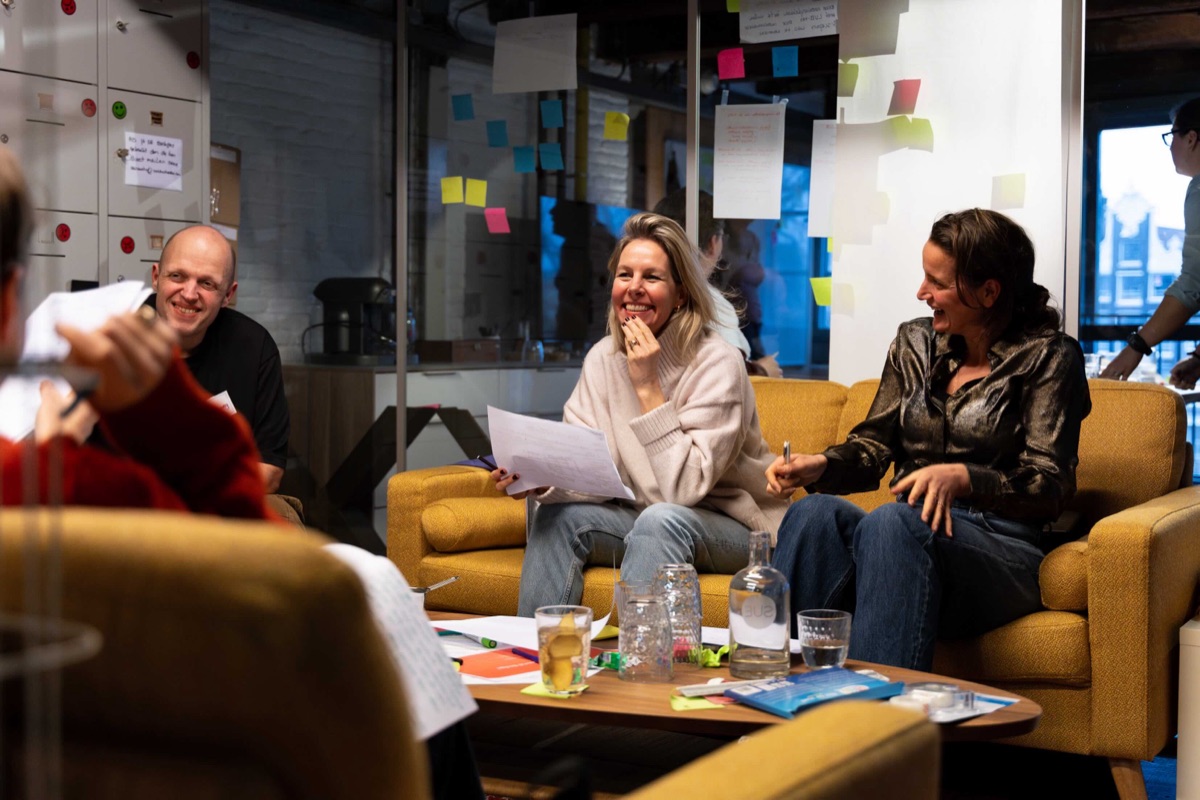
HR professionals during the Behavioural Design Fundamentals training at SUE Amsterdam

10,000+ professionals trained, including people from

Heineken ING Bank KPN Randstad Achmea Adyen Eneco ANWB Roche European Commission Gemeente Amsterdam DPG Media Sony ABN AMRO Booking.com Heineken ING Bank KPN Randstad Achmea Adyen Eneco ANWB Roche European Commission Gemeente Amsterdam DPG Media Sony ABN AMRO Booking.com
Change management is a behaviour profession

Every change professional runs into these behaviour challenges.

Kick-offs, change plans, adoption campaigns. Again and again: people understand the change but fail to adjust their behaviour. The question is not whether you recognise this. The question is how you break through it.

01 · Buy-in

How do we get real commitment, not just polite agreement?

Everyone nods yes in the meeting. Nothing changes in the corridor. Buy-in that is only in words is not buy-in.

02 · Adoption

Why do people revert to old behaviour after three months?

The launch was well-attended, the first weeks went smoothly. Then the old habits crept back. Adoption that sticks does something fundamentally different.

03 · Resistance

Why does this employee sabotage every change?

Not with words, but with behaviour. Late approvals, constant exceptions, informal veto. Resistance is a design problem, not a personality problem.

04 · Communication

Why does our change communication increase resistance?

The more we explain, the more people worry. Change communication that informs is not the same as change communication that moves people.

05 · Managers

Why do middle managers support the change in words but block it in behaviour?

The sponsor speaks, the manager nods, the team waits and sees. The behaviour of middle managers is the bottleneck most change programmes never design for.

06 · Culture

How do we get the new working method to survive the daily pressure?

The workshop went well, the principles are clear. Under deadline pressure everyone falls back on what they know. Culture is not what you write on walls.

07 · Stakeholders

How do we move stakeholders who see themselves as outside the change?

"This doesn't apply to us." Every change programme has a group that opts out. The Influence Framework explains why, and how to change it.

08 · Sustainment

Why does the quick win never lead to structural change?

The pilot was a success. Scaling it did not happen. Quick wins that do not connect to system change stay quick wins.

09 · Fatigue

How do we reach teams that have been through too many transformations?

Change scepticism is not resistance. It is a learned response to change initiatives that never delivered. Designing for that takes a different approach.

Why the SUE Behavioural Design method

Behavioural science made practical for professionals who are not behavioural experts.

Most behavioural science knowledge is locked in academic papers and consultancy reports. SUE built its own method, the Influence Framework, which translates that knowledge into a practical step-by-step process any HR professional can apply, without a scientific background.

Read: the SUE Influence Framework explained →
SUE Influence Framework
No academic theory — you work on your own HR case during the training and go home with a fully worked-out plan
Built on Kahneman, Cialdini and Thaler, scientifically grounded but accessible for practitioners
Our own method, the Influence Framework is not taught anywhere else, described in the #1 management bestseller
16 years of experience, from ING to Heineken to the Dutch Government: the method has been proven on the biggest HR challenges in the Netherlands
Springest
9.3/10
★★★★★
Google
4.8/5
★★★★★
Bloomville
5.0/5
★★★★★
Certified by
EQAC accredited
The ideal starting point

Three featured programmes for HR

Individually, with your whole team, or as self-study. Three formats in which you learn how to design behaviour in onboarding, retention, culture change and sustainable employability. Choose the format that fits your role, schedule and organisation.

Our full range

Or browse all our trainings and programmes

In addition to the three featured trainings above, we have a broader range. Choose below the format that suits you. Every path leads to the same goal: designing behaviour change that sticks in adoption, culture and transformation.

What change professionals say after the training

10.000+ professionals have followed a SUE Behavioural Design training.

The change professionals among them have one thing in common: afterwards they look at resistance, adoption and culture differently.

After the training

What change professionals do differently after the Behavioural Design training

Not abstract knowledge. Concrete changes in how you approach adoption, resistance and lasting behaviour change.

You analyse behaviour before you design the change intervention

You use the Influence Framework as your starting point: what drives these employees, what's holding them back, what context helps?

You design workplace context, not just HR communication

You shape the work environment so that the desired behaviour becomes the easiest choice, not just the most communicated one.

You speak the language of behaviour in change decisions

You share a common framework with your team: goals, anxieties, habits, context, friction, triggers. HR decisions become more concrete and better grounded.

Frequently asked questions

Frequently asked questions about Behavioural Design for HR

Most participants start without any prior knowledge. The training teaches you the behavioural science you need, linked directly to your own change practice. No academic theory for its own sake, just actionable insights you can apply the very next day in your adoption, buy-in or culture change work.

You learn the SUE Influence Framework: a method for analysing why employees do what they do, and for designing HR interventions that genuinely work. You work on your own HR case during the training, such as onboarding, retention, culture change or wellbeing, and go home with a fully worked-out strategy you can apply the next day.

The training is most valuable for experienced change professionals. You've got the practical experience. The training gives you the scientific framework that backs up your intuition and sharpens your approach. Many participants say afterwards: I was already doing parts of this, but now I understand why some programmes work and others don't.

A deliberately mixed group: HR professionals, marketers, communication advisers, policymakers and leaders all together. Maximum 16 participants. That mix is what makes it valuable, because you learn not only from the content but also from how people in other sectors deal with similar behavioural challenges.

Yes. We invoice in the company name and the training is EQAC-accredited, which makes reimbursement easier. Get in touch if you need a quote or additional information for your request.

Start with the Fundamentals. That gives you the complete Behavioural Design framework: the Influence Framework, the JTBD method and all core tools. The Deep Dive Change Management builds on that with change-specific applications. Without the Fundamentals, the Deep Dive lacks its foundation.

The Fundamentals course is the broad foundational training: 2 days live (or 33 online lessons) in which you learn the complete Behavioural Design framework. After that, you can apply it to any change challenge. A Deep Dive training lasts 1 day and goes deep on one specific topic, such as adoption, resistance or culture change. If you do both, the Fundamentals course is always the first step.

Yes. The Behavioural Design training is EQAC-certified, which makes reimbursement from employers easier. We invoice in the company name and provide a quote on request. The course is given in Amsterdam and online. Get in touch for personal advice on which training best fits your situation.

Ready to take the step? View the next start date or ask your question.

View start dates → Ask a question

10.000+ professionals have gone before you · 9.3/10 rating · EQAC accredited

Behavioural Design is the missing layer.

Why a well-intentioned HR policy doesn't automatically change behaviour

Behavioural Design for change management is the application of behavioural science to adoption, resistance, culture change and lasting organisational behaviour change. The method helps you understand why people do what they do under pressure, and how to design the change process and work environment so that the new way of working becomes the natural default.

1
96% of behaviour is automatic. Most HR interventions address the conscious mind: posters, e-learnings, wellbeing campaigns. The Behavioural Design Method teaches you to read the unconscious, and design for it.
2
Five forces shape every behaviour. Pains, gains, anxieties, comforts and jobs-to-be-done. The SUE Influence Framework teaches you to recognise them in employees, managers and candidates, and use them to influence HR decisions.
3
Behaviour is designable. The Behavioural Design Method gives you a step-by-step process for changing the work environment, not the person, so that ownership, engagement and sustainable employability become the natural default.
Read more about the Behavioural Design Method →
Personal advice

Would you prefer to discuss the options with us?

Book a no-obligation discovery call. Marjan will connect you with the right SUE specialist who can give you targeted advice based on experience with HR challenges.

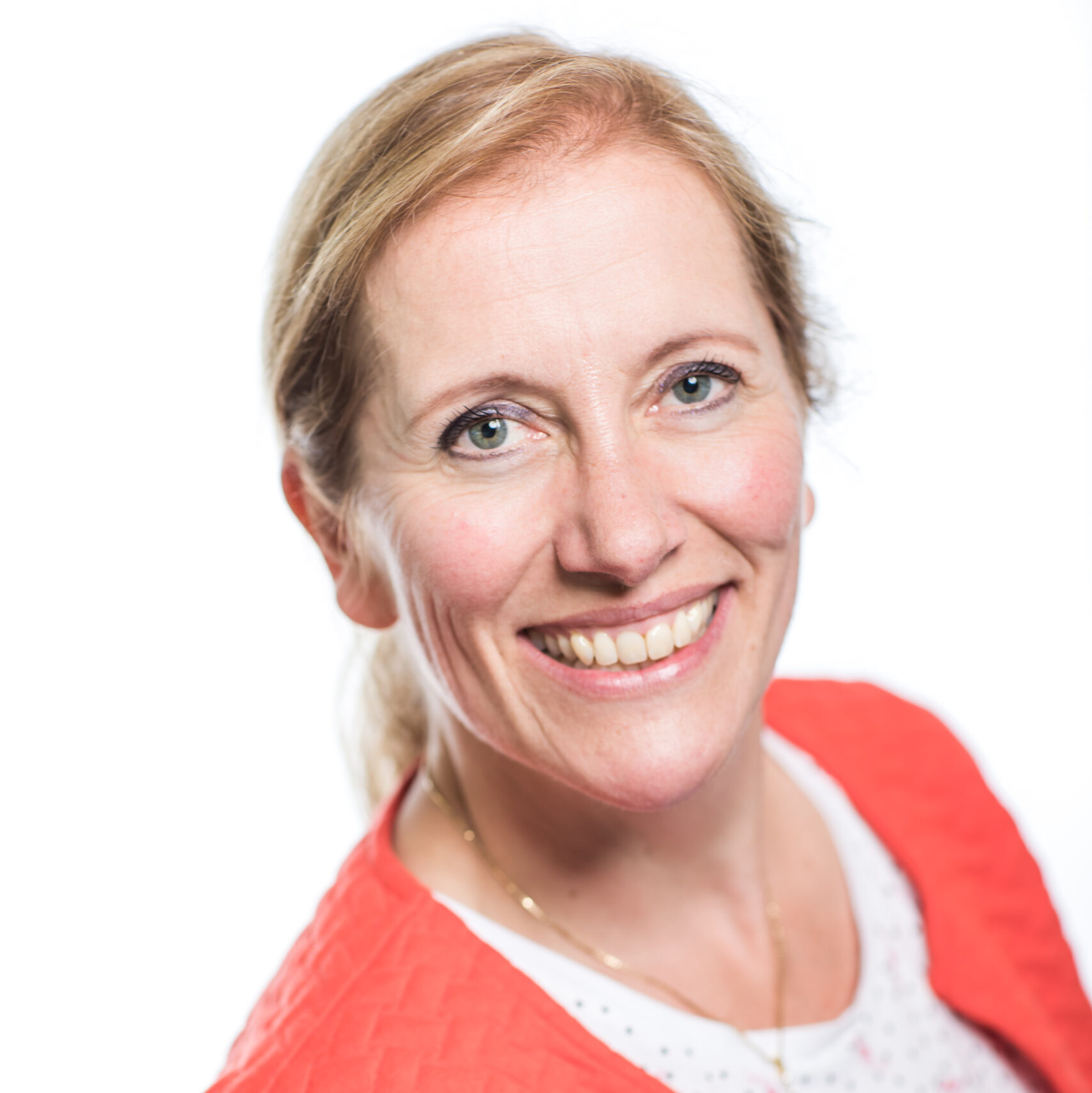
Marjan Krom, Happiness and Hospitality Manager SUE
Marjan Krom
Happiness & Hospitality Manager

Book a call

Choose a moment that suits you.

Next edition
Behavioural Design Fundamentals — 21 & 22 May 2026 5 spots remaining
Enrol now →